September 25: Exploring early autumn; by Mie
|
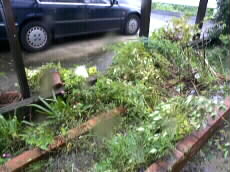 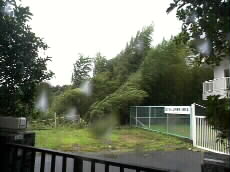
Typhoon No.18 hit Oita yesterday; raging over whole Oita prefecture and leaving damages everywhere. It also marked a record-high wind velocity, some 100-mph. What was lucky for us, we suffered only slight damages on my garden such ad blown down of the plants in the flowerbed (left), or scattering of the twigs and leaves around the house.
I pay sympathy for those who got heavy damages. High bamboo bush on my backyard still shakes its massive foliage violently right and left, even after the eye of the typhoon passed away.
|

Typhoon No.18 landed Kumamoto, traversed Oita, and landed again on Yamaguchi prefecture, leaving deep scars everywhere. It is now roaming over Japan Sea, heading to Hokkaido Island. A beautiful sunset after the storm, viewing from my home.
|
|
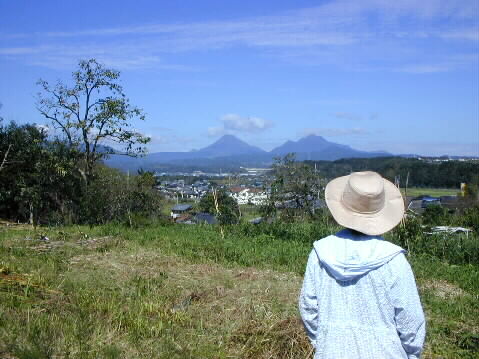
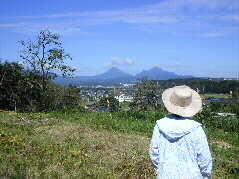
Next morning September 25th was cleared up giving us a wonderful refreshing day after a typhoon. I can see such a clear sky after a long time. I first washed cloths piled high in my bathroom, and then went out for a walk. Mt. Yufu (left) and Mt. Tsurumi (right) soar well high under the blue sky. Click the picture to enlarge.
|
|
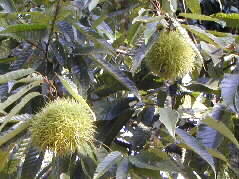
Chestnut burs are growing still in green in an orchard nearby.
|
|
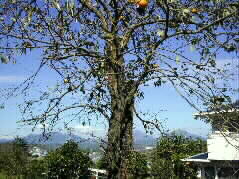
The Japanese persimmon tree holds some fruits ready for cropping. Click the picture to enlarge.
|
|
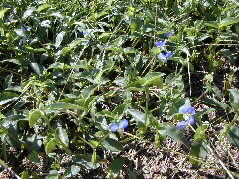
On the footpath are such lovely dew flower, sparkling in the morning sun.
|
|
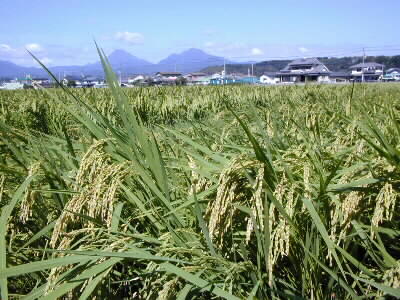
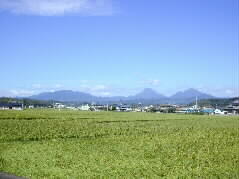
I came down to a rice field next to my home. The ears of rice plant have already turned into slight yellow. The plants look like well-survived strong wind and heavy rain of the typhoon.
|
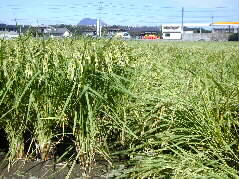 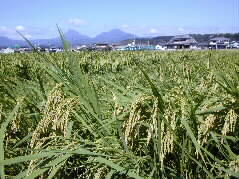
I learned that there were various kinds of rice plant. The two pictures show rice plants growing in two adjacent rice paddies. You see the difference of the plant: in the left paddy, the stalk of the plant is strong enough to resist the typhoon wind, but is weak in the right paddy, slightly blown down. The rice plants on the right, however, hold much golden grain on the top. Cropping will soon start in the field.
|
|
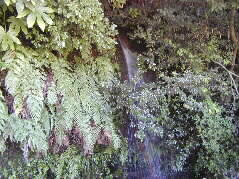
A mini-fall makes a cool sound in a small stream burbling along the rice field.
|
|
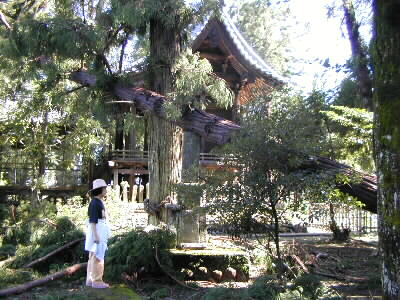
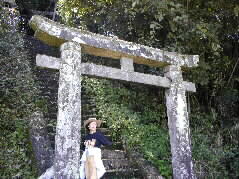
This is a local deity called Hayashi in our community. I passed under a mossy stone gateway and climbed up a steep stone stairs to worship it.
|
|
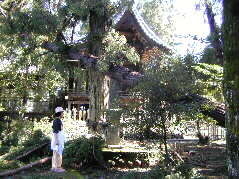
The typhoon left scars in this small precinct as well, scattering twigs, leaves, and even some
roofing tiles of the shrine. A big Japanese cedar is uprooted. I wonder how old the tree was. If the tree hit the shrine, it would have entirely crushed the building. You see a stone monument barely support the heavy trunk of the tree? The monument reads "In commemoration with
the Russo-Japanese War of 1904‐05."
|
|
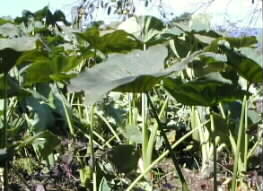
Well go home now. Passing through the Hayashi shrine, I found big taro plants, the wide blades are always swinging in the breeze as if they are saying "No, no."
|
|
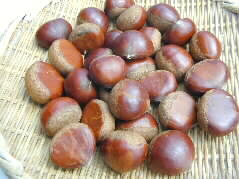
Just after I got back home, one of my close friends showed up with her husband. They presented me wonderful chestnuts like this. She said they were cropped from a chestnut tree in her garden. Great! What shall I cook them, into chestnut rice, mashed sweet potatoes with sweetened chestnuts, or simply roast? Let's enjoy autumn, the season of the pleasures of the table!
|