|
March 12: My alma mater, by Mie
|
|
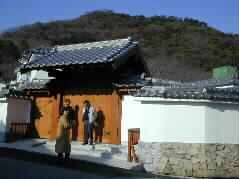
Walking along the black wall of the museum, I found a large new gate with white plaster still wet with moisture. This is the gate to the swimming pool of the elementary school. On the right is the main building of the school. The fence still holds the old remnant, my mother said. |
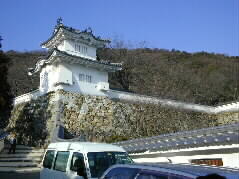
| I can't see the pool behind the wall. On the top end of the wall is a turret of Tatsuno castle. |
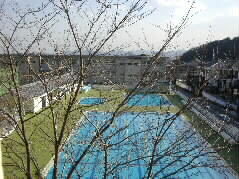
| On the way to the back gate of the castle, I could see the inside of the wall and found swimming pools, indeed. | |
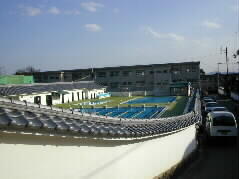
| Looking down through the gun opening of the castle wall. I can see three swimming pools with a changing-room on the left behind the twigs of a cherry tree. |
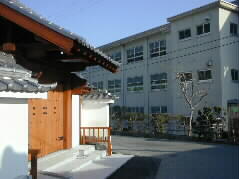
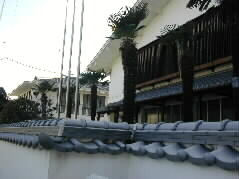
| Across the pass is a big building with massive roofing tiles behind another white wall. This is a hall of the school. The gate was once used as the formal entrance of a chief retainer of a feudal lord. | |
|
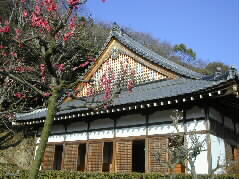
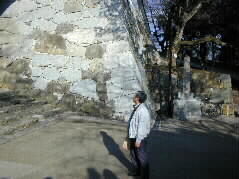
Tatsuno castle sits still in the flavor of Ume blossoms with warm spring air. The shadows of Ume branches reflect on the white wall of the building. There had been a high school my mother attended. After the World War 2, the school was turned to a junior high school my brothers, my sister and I attended as well. My younger brother looks up the old slope longingly. He used to be forced to run around the slope as he was punished. |
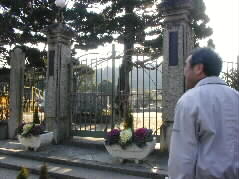
| The main gate of the school that has a long history since 1883. |
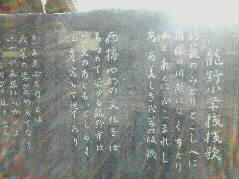
The school song composed by Rofuu Miki and Kousaku Yamada's melody is engraved on a stone monument.
I My mother, my younger brother and I soon heard ourselves singing the school song in a loud voice. | |
|
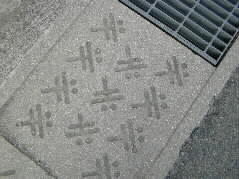
Rofuu Miki is famous for his children's song "Red dragonfly." He composed this music by recalling his boyhood in Tatsuno. Red dragonfly is everywhere as a symbol mark of the city.
Red dragonflies on the cover for a ditch. |