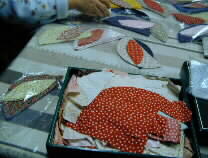
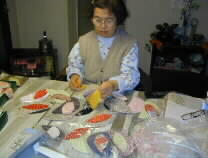
I have many waste pieces from cutting cloth. As they are too pretty to throw away. Some of my friends also do like that. Today, we will have a study class in our Group of Friend's house to make toys from those waste pieces. I bring some of waste pieces as well to make "Flower balls."
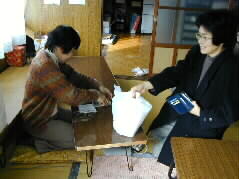
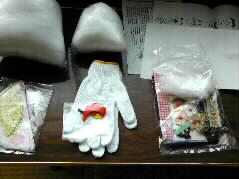
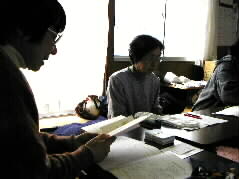
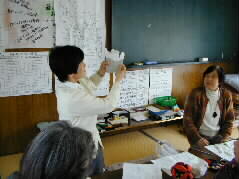
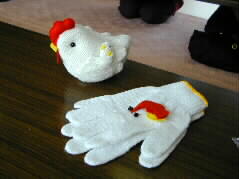
The first toy is "Mrs. Hen" made of work gloves. Mrs. Aramaki explained how to make it. As I have always been looking the lovely toy, I am very glad that I can make it myself. We soon started making the toy.
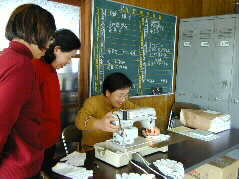
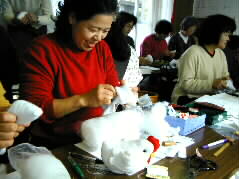
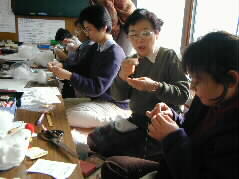
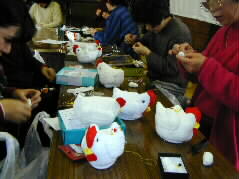
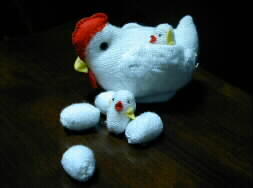
By noon, many lovely hens were born one by one. A hen hatches no less than four eggs under her body and holds two chicks in her wings. As you see here, all parts of a working glove is fully utilized for making a hen. You like those lovely hens and chicks?
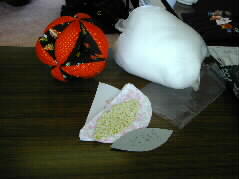
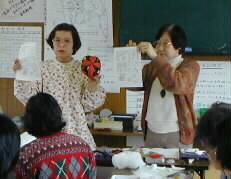
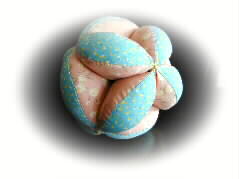
Next, I explained how to make a "Flower ball." The materials are 100 grams of synthetic cotton, cloths, and 12 cut-out pieces of large and small cloth respectively. Mrs. Yamada helps me in making a ball and I explain the procedure. The flower ball is very popular because it can be grasped by small palms of a baby. It is also washable by machine. The ball should be sewed in a fine pitch and firmly.
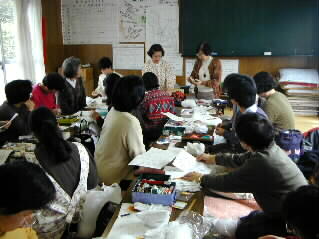
I am on edge because all the trainees are gazing my finger and hand.
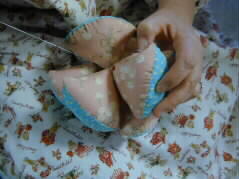
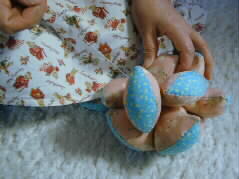
Cloth blocks firmly stuffed with cotton, 12 large and 12 small, are then sewn up into one to make four larger blocks by using strong thread.
The top of the four larger blocks are finally combined to make a flower ball.
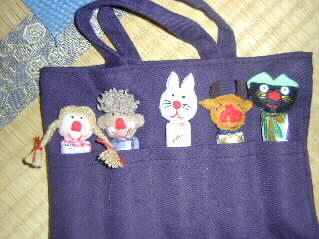
The last step is to make a "Fairy tale bag" by Mrs. Yamada. The bag contains lovely puppets who may talk to children when they get tired in a long ride on a train or so. Children would be very happy if they could play with the lovely puppets and creating pleasant stories together with the mother. The bag is supposed to be a treasure to all kids.
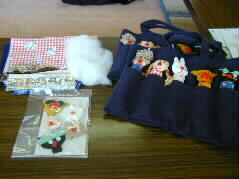
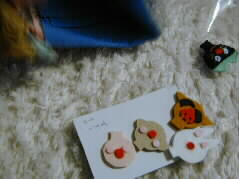
On the left picture are the building blocks of the bag. On the right are the face pieces of the puppet. Eyes, noses, hairs, and stuffing cotton will make the heads of the puppet. It is strange to say that even the similar parts will result in different expressions resembling to the creator. All the trainees will make a wondrous fairy tale bag as a homework.
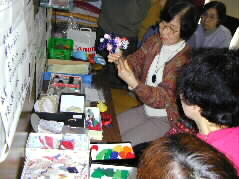
In the end, Mrs. Yamada disclosed the key how to make toys during her busy days: she arranged in order many materials ready to saw such as tossing beanbags, fishing-play, cloth-book, and miniatures of vegetables. I made up mind to prepare such items using waste pieces from cutting cloth. Well, I will do my homework from now.